October 3, 2026
Animal Welfare & News
Animal Welfare & News
Not every microchip merger has gone smoothly.
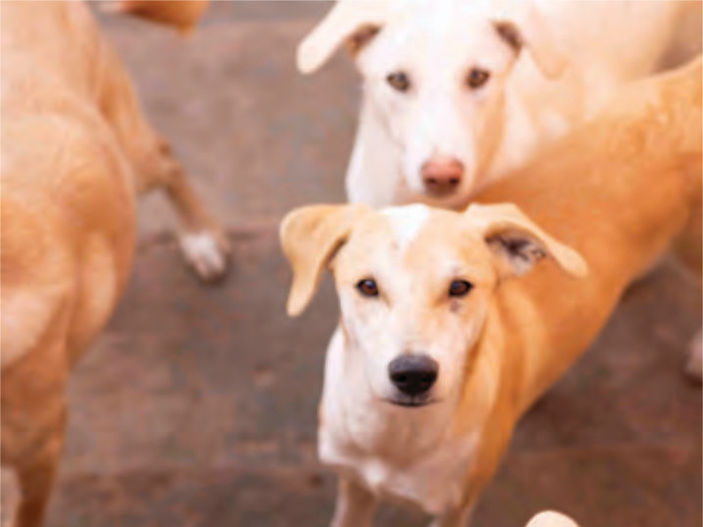
Journalist Adam Read reports on Sunshine Animal Refuge Agadir, founded by Michele Augsburger, which cares for around 1,100 dogs and 200 cats amid Morocco's stray animal crisis. The charity relies on donations as it battles funding pressures and culling practices.

By Adam Read
Whilst in Agadir I came across Sunshine Animal Refuge Agadir (SARA Morocco). Managed by a small team, this animal welfare organisation is doing all it can to rescue, rehabilitate, and rehome the nation's abandoned dogs and cats. However, the difficulties faced are daunting and their journey is a tale of hope, sorrow, and survival.
The Scale of the Crisis
It is estimated that at least three million+ stray dogs live in Morocco, according to the local government. The animals have a life based on food scraps and the rare generosity of strangers. Rabies continues to be an ongoing risk to animals and to the human population and the World Health Organization has commented that animal rabies cases are in the hundreds per year in Morocco.
Although many Moroccans are caring for such animals, there are others who view them as pests. In certain regions, local authorities still resort to culling, either through poisoning or shooting, to control their numbers. It is a somber truth that SARA Morocco has been striving to alter.
Recognizing the scale of the crisis, Morocco's Ministry of Interior, in collaboration with the Ministry of Health and Social Protection, the National Office for Sanitary Safety of Food Products (ONSSA), and the National Order of Veterinarians, is implementing a humane approach to managing stray dogs and cats. The government is to also provide 80 million dirhams ($8.4 million) for the design and installation of animal dispensers across the country.
The activity is to catch stray dogs, sterilize them as an aid to population control, vaccinate against rabies, parasitize them, and release them in their original habitat, or what is called Trap-Neuter-Release (TNR). This approach is already in use in the cities of Rabat, Sale, and Temara and the goal is to take care of public health issues, and treat animals humanely. Charities in Tangiers and Agadir are also carrying out TNVR independently.
Also, Morocco has the prospect of implementing 130 community grade health offices in 2025 in pursuit of nearly 100% national coverage for the control of stray animals and rabies. These actions, officials have indicated, represent a major change toward responsible and humane solutions to the problem of wandering animals.
A Refuge Born from Tragedy
The Swiss entrepreneur, Michele Augsburger, of SARA Morocco, founded the organization in 2013. Her journey began long before that, however, driven by her childhood memories of seeing stray dogs culled en masse. "When I was a child, I was traumatized by how they died, shot, poisoned or asphyxiated," she recounts to me.
Beginning in 2017, SARA, in collaboration with the council, successfully released over 1,500 tagged, vaccinated, and neutered dogs back onto the streets. However, in April 2018, local authorities brought the program to a halt.
"They told me the dogs would be killed. So I told them, 'Let them come to my shelter,'" In two weeks, her shelter population expanded from 80 to 850 dogs. It was just a tsunami of dogs, she remembers, shuddering at the thought.
Currently, SARA Morocco cares for 1,100 dogs, 200 cats, and various other animals, including birds, rabbits, and donkeys, in their two refuges. Inside her house, animals are everywhere, dogs and cats wander freely, while others are housed in spacious enclosures outside. The constant noise is just part of Michele's daily routine. When I asked if the noise disrupts her sleep, she said, "I don't sleep very well anyway due to the cancer medication I am taking." Michele has fought breast cancer in both breasts, adding another layer of strength to her already challenging work.
Heroes Among the Chaos
Walking through the shelter, every dog has a story. There's Teddy Bear, a dog who lost his legs when a rubbish skip was accidentally dropped on him. Thought too injured to survive, he was given painkillers and antibiotics, and against all odds, he pulled through. Now he's a spirited dog, though he still needs a permanent home abroad where he can receive specialized care. The search for a new home continues. "If I cannot find a home for him in Europe, I will take him there myself, get prosthetic limbs and bring him back," Michele added.
There is Tam, a blind dog with a very special connective tissue condition, Ehlers Danlos Syndrome. Born at the shelter, Tam is part of a lineage tied to a remarkable tale of resilience. His father, Rocco, was an urban street dog, plucked out of the Western Sahara by a UN officer in a helicopter. Rocco found his forever home in Germany, but his legacy lives on in Tam, who, despite his disability, has become a shelter favorite.
Francoise, a SARA volunteer, has her own tale of loss and commitment. She has been providing food and care for dozens of dogs on the beaches north of Agadir for nearly ten years. I met her daily as she feeds some stray dogs near to the apartment I am staying in.
"They recognise my car and come to me when I pull up," she states. But not all endings are happy. There she returned to discover that some of her dogs, tagged and neutered, had been shot by the police afterwards. "Two days earlier, they told me I was doing a good job," she says bitterly.
A Cultural Shift in Progress
Dogs in Morocco occupy a complex place in society. Traditionally seen as working animals, used for guarding or herding, they have not been widely regarded as pets. There is also a widespread misconception, based on cultural misrepresentations, that dogs are dirty. Nevertheless, this sentiment is gradually changing, particularly in the city where a younger generation and foreigners brought the concept of dogs as pets.
Hazel Skeet, a Scottish volunteer, believes that education is key. "The average Moroccan doesn't want to see animals suffer but often lacks the resources or knowledge to provide proper care," she explains. She recounts: "When a dog in my village was poisoned, its owner came to me in tears. We managed to save the dog, and it transformed how people viewed the potential for these animals. It also changed my perspective, showing me that they do care, albeit in a different way than we do in Europe," she adds.
Funding a Lifeline
Running such a big shelter means a large financial burden. Michele spends €4,000 from her own pocket every month for SARA to operate, having already invested her life savings of €500,000 into the project. Supporters from Europe and worldwide contribute the rest but it's a precarious balancing act of staying afloat.
"We have incredible dogs ready for adoption, but adoptions are slow," says Michele. The situation has only become worse since COVID, with European shelters flooded with forsaken animals. "Meanwhile, tourists bring us injured or dying animals they find on the streets. Saying no is difficult (and we don't always manage), but we have to keep focus on the care of the dogs we currently have," she said.
What You Can Do
SARA Morocco's work is dependent on community and international support to continue rescuing and caring for animals in distress. Donations, no matter how small, actually fund the provision of food, medical care and sheltering maintenance. Sponsoring a dog provides a stable flow of funds for individual animal monthly expenses. For those looking to adopt, SARA facilitates the entire process, including vaccinations and travel arrangements, making it easier to provide a forever home to one of their animals. Furthermore, the dissemination of the story of SARA via social media can aid in reaching a wider audience which could potentially lend its support or become part of the solution.
A Final Reflection
While in Morocco, I saw both the struggle and the tenacity of the street dogs. At one of my regular surf spots, I brought pet food from a supermarket to feed four dogs daily, that lived there. The littlest of them, whom I named Ralphie, was a playful and sweet dog, who seemed to be quite underweight. One day, Ralphie was nowhere to be found, and on the third day, I discovered him lifeless near the spot where I always fed the dogs. It was a deeply painful moment. I put him in a peaceful area away from the road, and prayed. I was unable to bury him as the soil is mostly rock and I was without a spade, so I did my best to cover him with local fauna.
"We're not just rescuing dogs. We're changing how they're seen, one life at a time," concludes Michele.
For more information or to donate please also visit SARA Morocco website or follow them on social networks: https://www.saramorocco.com
Not every microchip merger has gone smoothly.
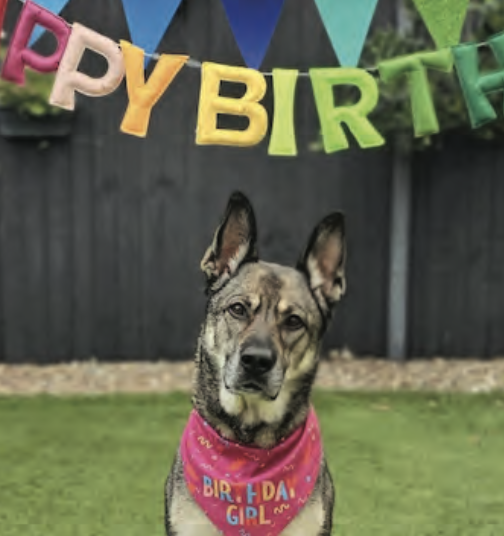
Eight-year-old Harper lost the home and person she knew when her devoted owner became seriously ill. Four months later, after getting a precious taste of family life again in foster care, she is still waiting for someone to choose her.
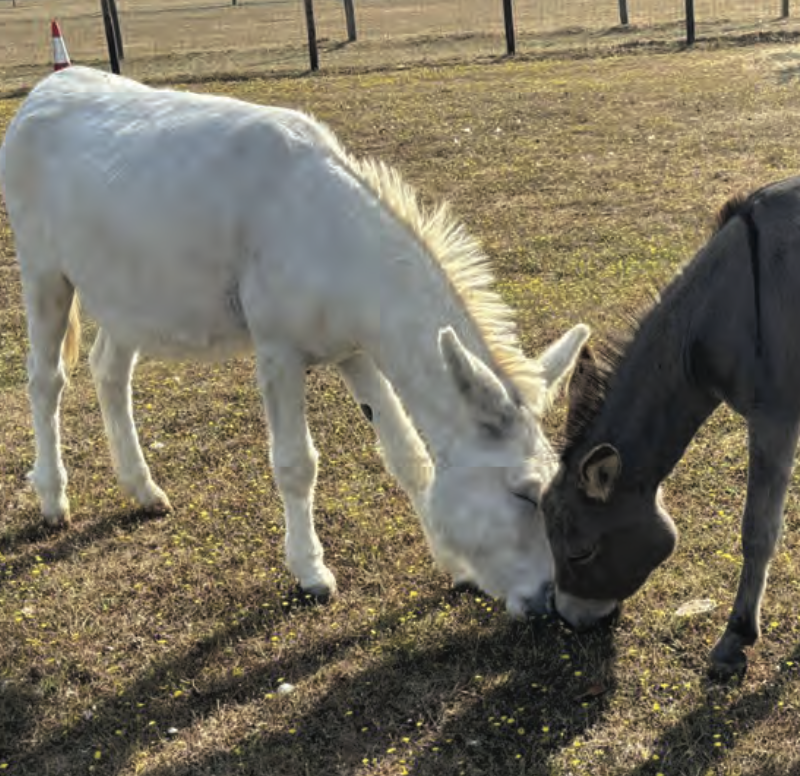
A donkey named Dandi, who was among more than 50 other animals seized by the RSPCA from an address in Essex in 2023, is thriving in the care of The Donkey Sanctuary.